
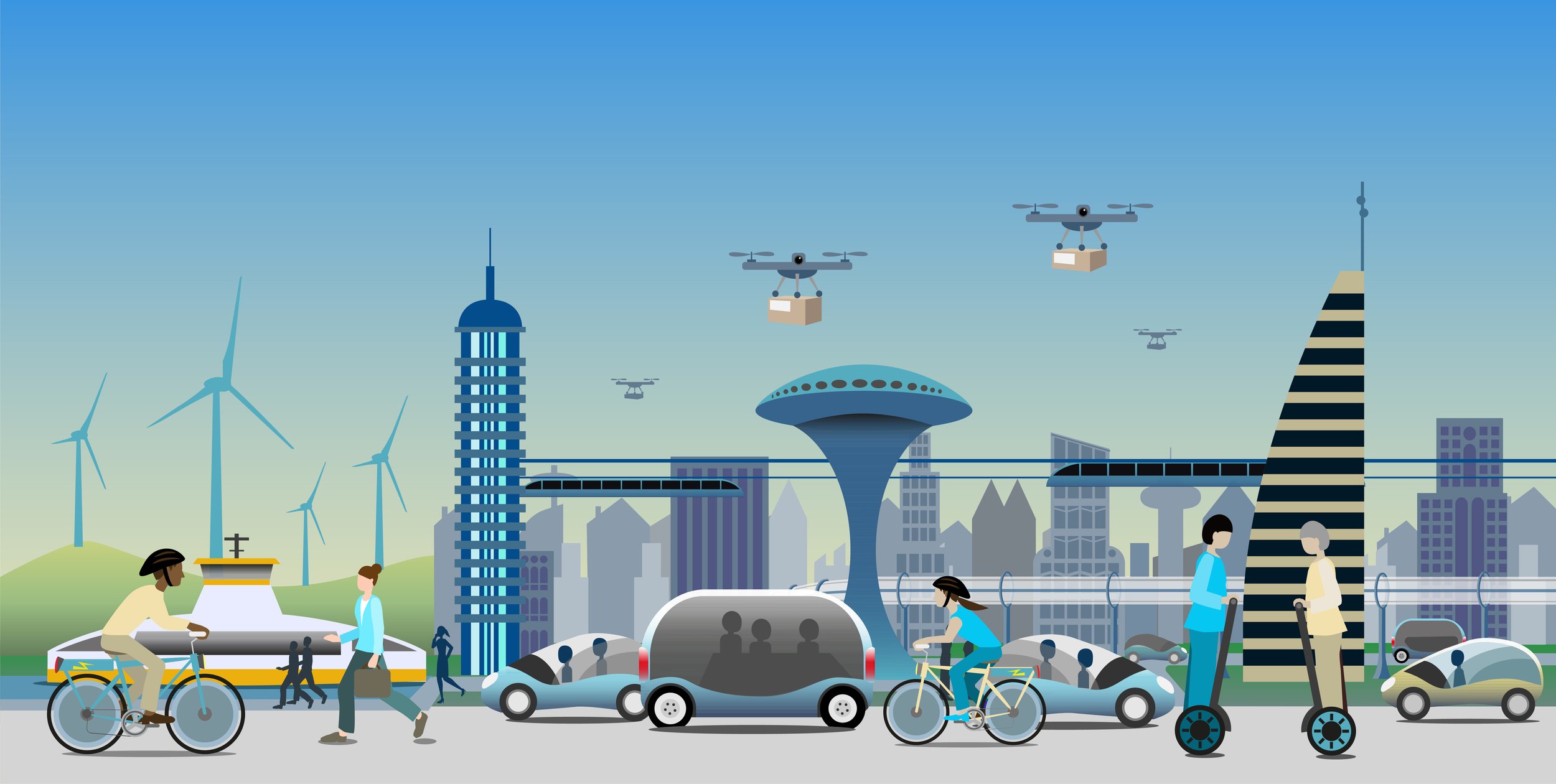
Why Drones?
Level 1- Introduction
Drone Components


I. The Drone Frame -
-
“A journey of a thousand miles begins with a single step.” —Lao Tzu
Overview
Structure and Material:
Define what a drone frame is and its importance.
Discuss the common materials used in drone frames (e.g., carbon fiber, plastic, aluminum).
Types of Frames:
Introduce various frame configurations (e.g., quadcopter, hexacopter, octocopter).
Importance of Weight and Durability:
Explain why balancing weight and durability is crucial for drone performance.
-
The frame is the skeleton of the drone, holding all components together.
It must be lightweight yet sturdy enough to handle the stresses of flight and potential impacts.
-
Carbon Fiber:
Extremely lightweight and strong.
Ideal for high-performance drones.
More expensive than other materials.
Plastic:
Lightweight and inexpensive.
Commonly used in beginner and toy drones.
Less durable than carbon fiber.
Aluminum:
Lightweight and durable.
Used in some larger, more robust drones.
Balances cost and performance.
-
Quadcopter Frame:
Features four arms, each with a motor and propeller.
Most popular configuration due to its simplicity and stability.
Used in a wide range of applications, from recreational to professional.
Hexacopter Frame:
Features six arms.
Provides more lift and redundancy (can still fly if one motor fails).
Often used for carrying heavier payloads or for increased stability.
Octocopter Frame:
Features eight arms.
Offers the highest level of lift and redundancy.
Used in professional applications requiring heavy lifting and high reliability.
-
Weight Considerations:
A lighter frame allows for longer flight times and better maneuverability.
Reduces the overall power consumption, making the drone more efficient.
Durability Considerations:
A durable frame can withstand crashes and rough handling.
Ensures the longevity of the drone and reduces the need for frequent repairs.
Balancing Weight and Durability:
Finding the right balance between weight and durability is crucial for optimal drone performance.
Engineers design frames to be as light as possible without compromising strength..
-
Interactive Learning Activity: Frame Design Challenge
Objective:
Encourage students to understand the principles of drone frame design through an engaging activity.
Materials Needed:
Paper, pencils, rulers, and basic craft materials (e.g., straws, tape, cardboard).
Instructions:
Divide students into small groups and give them a set of materials.
Challenge each group to design and build a model drone frame using the materials provided.
Encourage creativity while ensuring they consider factors like weight and durability.
Discussion:
Have each group present their frame design, explaining their choices for materials and structure.
Discuss the advantages and disadvantages of each design.
Reflect on how different materials and designs affect the performance and functionality of a drone frame.
Let's learn the ABC's of Drones in Agriculture! Or TRY LEVEL 2
Get to know Drone Delivery
II. DELIVERY?
-
“If you want your dreams to come true, GET OUT OF BED!”
Components of a Delivery Drone: Motors, propellers, GPS, cameras, sensors, and payload compartments.
Flight Mechanics: How drones achieve lift, maintain stability, and navigate.
Autonomous vs. Remote-Controlled Drones: Differences in operation and control mechanisms.
-
FAA Regulations: Rules and guidelines for commercial drone use, including altitude limits and no-fly zones.
Safety Protocols: Pre-flight checks, emergency procedures, and safety measures to protect people and property.
Privacy Concerns: How to ensure drones do not invade personal privacy and comply with data protection laws.
-
Route Planning: How drones determine the most efficient delivery routes.
Landing and Takeoff Points: Designated areas for drone deliveries, such as rooftops or specially designed drone ports.
Integration with Existing Systems: How drone delivery integrates with traditional delivery methods and logistics networks.
-
Commercial Deliveries: Examples include e-commerce, food delivery, and pharmaceuticals.
Humanitarian Aid: Using drones to deliver medical supplies and aid to remote or disaster-affected areas.
Industrial Uses: Applications in agriculture, construction, and surveillance.
-
Technical Challenges: Battery life, payload capacity, and weather conditions affecting drone performance.
Legal and Ethical Issues: Addressing concerns related to airspace congestion, environmental impact, and ethical considerations of autonomous deliveries.
Innovations: Future trends such as swarm technology, improved AI for navigation, and advancements in drone design and materials.
III. Art
-
“The beginning is the most important part of the work.” —Plato
Components: LEDs, GPS, gyroscopes, and communication systems used in performance drones.
Software Systems: Programming languages and platforms used to design and execute drone light shows.
Synchronization Techniques: Methods for coordinating multiple drones in a cohesive performance.
-
Artistic Concepts: How to create visually appealing designs, patterns, and animations with drones.
Choreography: Techniques for planning and orchestrating drone movements to create dynamic displays.
Customization: Options for customizing drones with different lights, colors, and effects.
-
Legal Requirements: Understanding the regulations and permits needed for public drone performances.
Safety Protocols: Ensuring the safety of the audience, operators, and equipment during a show.
Risk Management: Identifying and mitigating potential hazards, such as weather conditions and technical failures.
-
Entertainment: Examples of drone light shows at festivals, concerts, and public events.
Advertising and Marketing: How businesses use drone shows for promotional purposes and brand awareness.
Cultural and Artistic Events: Utilizing drone art for cultural festivals, national celebrations, and artistic exhibitions.
-
Technical Challenges: Overcoming issues related to battery life, signal interference, and precision control.
Environmental Considerations: Addressing the impact of drone shows on wildlife and local ecosystems.
Future Trends: Exploring advancements in drone technology, AI-driven choreography, and the integration of drones with other forms of digital art and interactive media.
Learn about Drone Light Shows!!
Let's take a look at the remote control! What does it do? How does it connect? What actions do the sticks control?
IV. Photography & Mapping
-
“Beyond the edge of the world there’s a space where emptiness and substance neatly overlap, where past and future form a continuous, endless loop. And, hovering about, there are signs no one has ever read, chords no one has ever heard.”
― Haruki Murakami
Drones and Cameras: Types of drones and camera systems used for mapping and photography.
Sensors: Different sensors such as RGB, multispectral, and thermal cameras.
Software Tools: Mapping software (e.g., Pix4D, DroneDeploy) and photo editing software (e.g., Adobe Photoshop, Lightroom).
-
Flight Planning: How to plan flights for optimal coverage and data capture, including waypoint navigation and grid patterns.
Data Collection: Methods for capturing high-quality images and data, such as overlap and angle considerations.
Post-Processing: Techniques for stitching images, creating 3D models, and generating maps.
-
Agriculture: Monitoring crop health, assessing field conditions, and precision agriculture.
Construction and Real Estate: Site surveys, progress monitoring, and creating promotional materials.
Environmental Monitoring: Mapping natural habitats, tracking changes in ecosystems, and disaster management.
-
Legal Requirements: FAA regulations, privacy laws, and obtaining necessary permits for drone operations.
Safety Protocols: Ensuring safe operation, including avoiding no-fly zones and maintaining line of sight.
Ethical Issues: Respecting privacy, avoiding sensitive areas, and ethical data usage.
-
Technical Challenges: Addressing issues like battery life, signal interference, and weather conditions.
Accuracy and Precision: Improving the accuracy of maps and models, and dealing with data anomalies.
Future Trends: Advances in AI for automated mapping, real-time data processing, and integrating drones with other geospatial technologies.
V. Environmental Monitoring!
Can you complete the following missions?
-
"My mission is to create a world where we can live in harmony with nature." - Jane Goodall
Types of Drones: Fixed-wing, multi-rotor, and hybrid drones used in environmental monitoring.
Sensors and Cameras: Utilization of multispectral, thermal, and LiDAR sensors for collecting environmental data.
Data Collection Tools: Software and hardware used for data acquisition, storage, and analysis
-
Wildlife Monitoring: Tracking animal populations, migration patterns, and behavior in their natural habitats.
Forestry Management: Assessing forest health, monitoring deforestation, and mapping forest areas.
Water Quality and Marine Monitoring: Analyzing water bodies for pollution, temperature, and marine life health.
Agricultural Monitoring: Evaluating crop health, soil conditions, and irrigation needs through precision agriculture techniques.
Disaster Management: Assessing environmental damage from natural disasters like wildfires, floods, and hurricanes.
-
Remote Sensing Techniques: Understanding how remote sensing is used to collect and interpret environmental data.
Geospatial Analysis: Using GIS (Geographic Information Systems) to map and analyze spatial data.
Data Processing: Methods for processing and interpreting data collected by drones, including machine learning and statistical analysis.
-
Legal Requirements: Understanding the regulations surrounding the use of drones for environmental monitoring.
Privacy Concerns: Ensuring that drone monitoring does not infringe on the privacy of individuals and communities.
Ethical Data Use: Ensuring data is used responsibly and ethically, particularly when monitoring sensitive environments and wildlife.
-
Technical Challenges: Overcoming limitations such as battery life, sensor accuracy, and data transmission.
Environmental Impact: Ensuring drones do not disrupt wildlife or damage ecosystems during monitoring activities.
Innovations: Future trends in drone technology for environmental monitoring, such as autonomous drones, AI-driven data analysis, and advancements in sensor technology.
VI. Future Advancements
-
"Make your life a mission - not an intermission." - Arnold H. Glasgow
Artificial Intelligence and Machine Learning: How AI can enhance autonomous navigation, obstacle avoidance, and decision-making processes in drones.
Battery and Energy Solutions: Advances in battery technology, solar-powered drones, and other energy-efficient solutions to extend flight times and operational ranges.
Materials and Design: Use of lightweight, durable materials and innovative designs to improve drone performance and resilience.
-
Internet of Things (IoT): Connecting drones to the IoT for real-time data sharing, monitoring, and control.
5G and Communication Networks: Utilizing 5G technology to improve communication, data transfer rates, and control of drones over long distances.
Augmented and Virtual Reality: Integration with AR and VR for enhanced remote piloting, training, and maintenance.
-
Urban Air Mobility: The development of drone taxis and other urban air mobility solutions to revolutionize transportation in cities.
Agriculture and Environmental Monitoring: Advanced applications in precision agriculture, forest management, and environmental conservation.
Healthcare and Emergency Response: Future uses in medical deliveries, disaster response, and search and rescue operations.
-
Evolving Regulatory Frameworks: How regulations may adapt to accommodate new drone technologies and applications, including international cooperation and standards.
Privacy and Security: Addressing concerns related to data privacy, cybersecurity, and ethical use of drones in various contexts.
Public Acceptance: Strategies to increase public trust and acceptance of drones through transparent practices and community engagement.
-
Job Creation and Workforce Development: The emergence of new jobs and required skills in the drone industry and related sectors.
Economic Opportunities: How advancements in drone technology can drive economic growth, innovation, and new business models.
Social Benefits: Improvements in quality of life through enhanced services, connectivity, and access to remote areas.